New Combi Boiler Annual Savings: A Practical UK Guide
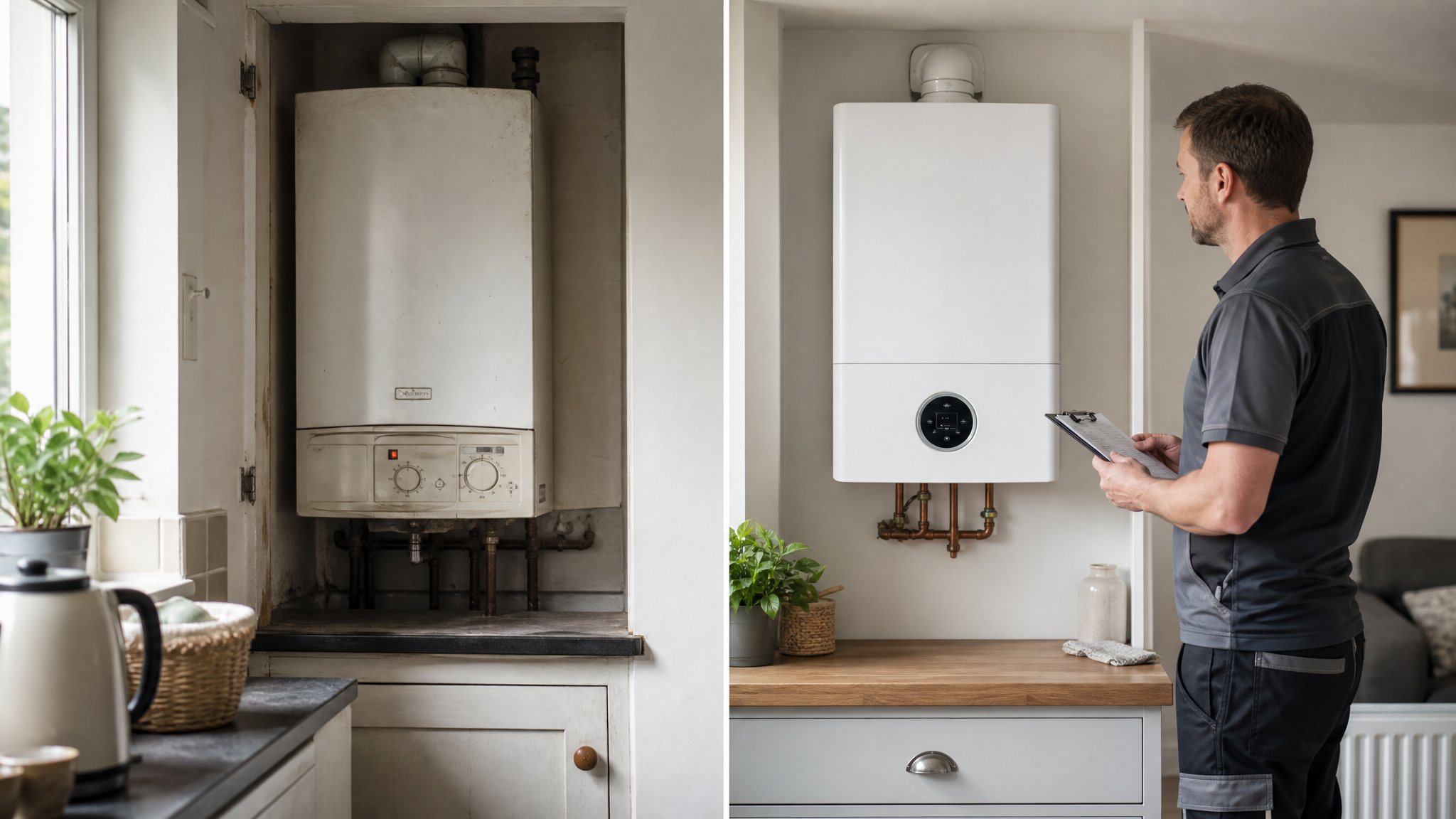
If you are thinking about replacing an older boiler, the usual question is simple: how much could the yearly saving actually be?
The safest answer is that savings can be real, but they vary a lot by home, insulation, controls, heating routine, and the efficiency of the boiler already installed.
Trust-first caveat
This is not a guaranteed saving result. The biggest differences usually come from the age and efficiency of the current boiler, the condition of the heating system, and how much gas the household already uses each year.
Illustrative yearly examples (rough, not guaranteed)
For a practical orientation, it is reasonable to use cautious UK-style ranges rather than headline claims. A modern A-rated combi boiler may reduce gas costs most clearly when it replaces an older non-condensing boiler in a home with meaningful heating demand.
Illustrative scale-only examples (not personal predictions):
- Typical 2-room flat: a cautious orientation range is around £60-£140 per year in lower gas costs, depending on current boiler efficiency, insulation, and heating pattern.
- Typical 3-room house: a cautious orientation range is around £120-£280 per year in lower gas costs, depending on boiler age, radiator balance, controls, and total annual gas use.
These are rough orientation bands only, not guaranteed outcomes. Homes replacing very old boilers may save more. Homes already using a relatively efficient condensing boiler may save less.
Safe interpretation rule
Use these figures as a decision-support estimate, not as a promise. The safest way to judge likely value is to compare current boiler age, EPC context, installer advice, and expected annual gas use before committing.
Source context: Energy Saving Trust boiler-efficiency guidance and current UK domestic gas-cost context from Ofgem-style price-cap framing.
Updated: 2026-04-06 · EnergyBonusUK Journal